|
Josh Wharton is one of America’s top—if not the top—all-around climbers. These days, you don’t hear his name much because he’s a complete social-media Luddite. Instead of scrolling, Josh uses his intelligence and free time to think more deeply than almost anyone I know about all aspects of our sport, from product design to culture to—most relevant here—climbing systems.
I’ve known Josh for decades, and I’d describe my relationship with him as delightfully combative. We did a few big trips together 10 years ago, and when we both lived in Estes Park, we trained together on occasion. The conversations were always as engaging as the climbing. He doesn’t hold back his criticism, and questions almost everything that comes out of my mouth. It’s a quality I find both aggravating and deeply admirable. When I’m questioning something, I often think, “What would Josh Wharton say?” And more often than not, that puts me on a better track.
For this month’s newsletter, Josh, Jane and I sat down for a deep dive into fix and follow—a technique that’s created a cult-like following, with Josh as its mysterious and reluctant leader. I’ve been looking forward to this conversation for a while, as I was initially pretty skeptical of the fix and follow craze, but recently, I have found myself coming back to it more and more. Fix and follow is polarizing. People either love it or hate it, and chances are, if you’ve heard of it, you’ll definitely have something to say about it.
|
|
|
|
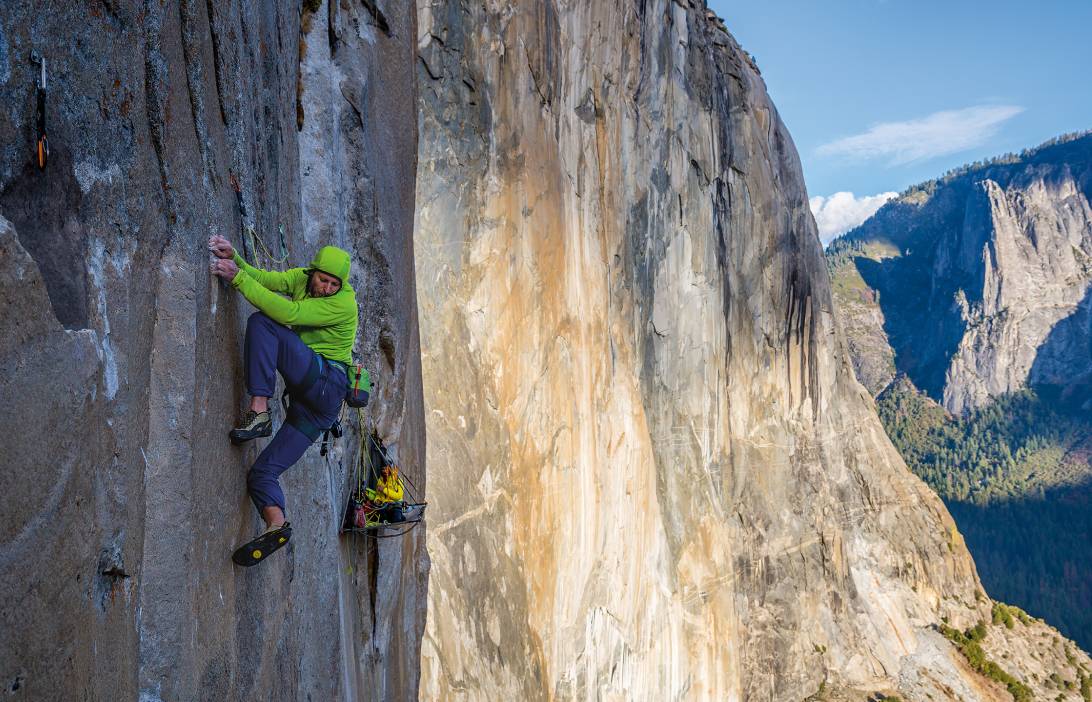
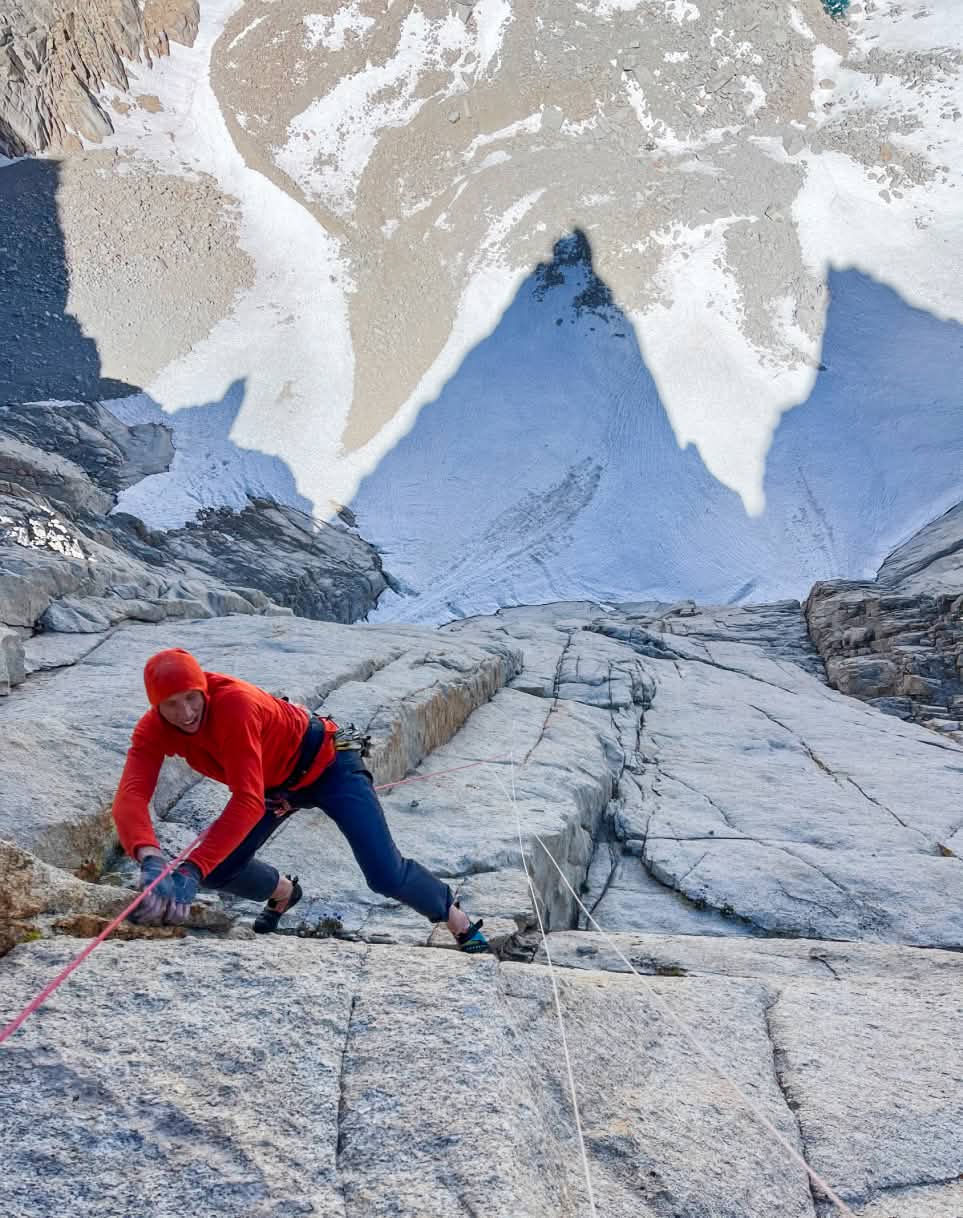
Josh started using this technique long before it had a catchy name, which he attributes to Mikey Schaefer. The story begins when Josh was trying the Hallucinogen Wall in the Black Canyon 10 years ago. In the old days, it was common practice in big-wall free climbing to enlist a partner to jug behind you on hard projects. Josh felt bad about the imbalance of the experience, where he got to climb every pitch as the leader while his enlisted friends had to jug with a pack, which was way less fun. He realized that the follower could actually climb behind using rope-soloing techniques, or Mini Traxioning. That way, the ascent felt a lot more collaborative, while still allowing him time to rest at the belay without messing with the rope. When we spoke recently, Josh said this was “the best idea I ever had in climbing by a long shot,” and wagered that this style has changed his own climbing and other people’s climbing more than anything else he’s thought of.
My biggest hang-up with following multipitches on mini-trax has always been about ethics. It’s way easier to accidentally sag on the rope a bit while mini-traxing, when you need to reverse a move or step down, for example. This is problematic in my mind when trying to onsight or team-free a long route. Josh, of course, had some workarounds here (advanced techniques that we won’t go into). He also pointed out that a lot of the beauty of climbing is that we can all make our own rules, using the example of bouldering with a rope. Josh explains, “I do a lot of Mini Traxion bouldering these days since my knees are so old, but I don’t use a tether when I’m going to actually send the problem. Without the tether, the micro is dangling off the bottom of my belay loop so that I can’t cheat any move.”
Other people argue that fix and follow ruins the connection between climbing partners. As the leader, you suddenly aren’t invested in your follower’s progress on the pitch and are instead taking care of your own needs, which skeptics feel is selfish and takes away from the partnership.
Josh feels differently. He described a particular ascent in the Verdon Gorge, when, as he and his partner sat atop the route and recounted the day, he realized how special it was that neither of them really knew how the climb went for the other. They were each able to have their own personal experience, together but separate, which to Josh felt soulful and special in a way that a traditional multipitch does not. In fixing and following, it’s just you, the follower, against the moves, with only yourself to witness how it goes. Some have even said that mini-traxing is the purest form of climbing, second only to free soloing. Perhaps it’s true?
Safety is the next can of worms that really riles up the skeptics, who claim fixing and following is more dangerous than traditional multipitch climbing. But in some ways, Josh argues, fix and follow is actually safer than belaying, especially in rambling, alpine terrain where a fall with a big loop of slack in the rope can result in slamming into a ledge. If the follower is mini-traxing, though, there is never a loop of slack, and they’re never waiting for the belayer to take up rope, or fighting against an accidental way-too-tight “birthday belay.”
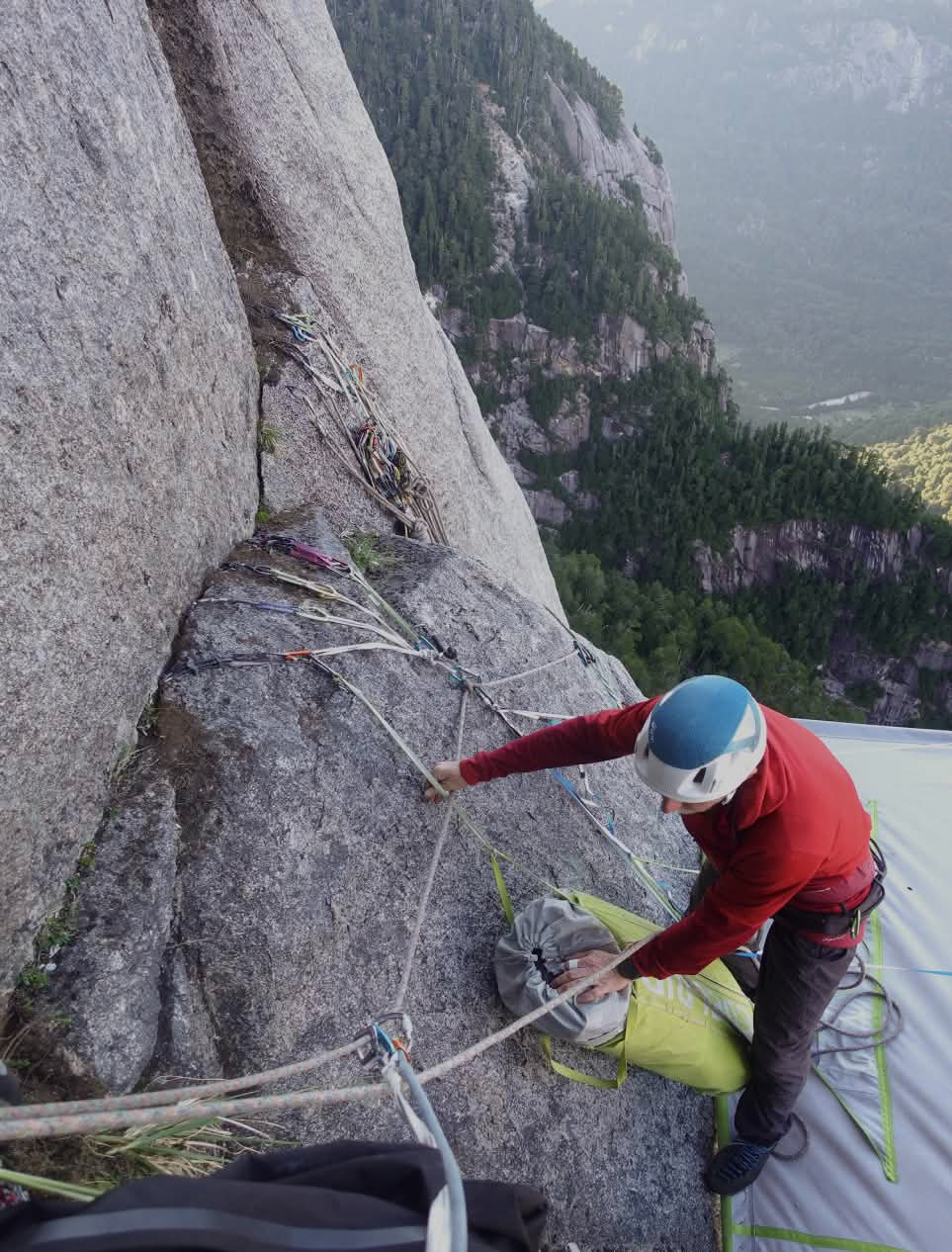
Fair enough, but eliminating the human element on one end of the system makes for more opportunities for user error on the other end. The follower is completely responsible for their own safety in this configuration, with more changeovers that provide opportunities to accidentally become unclipped from the anchor.
The other big concern that people have is the fact that this configuration is not a closed system. If you’re used to normal multipitch climbing, it can feel pretty unnerving to commit to having the end of the rope dangling below you all the time, and if the belayer is inattentive, they can theoretically belay the leader off the end of the rope! But even Jane, a self-proclaimed Nervous Nelly at times, agreed that you can get used to this system as a safety-conscious climber if the follower always uses multiple devices for redundancy and has a tether for clipping into an anchor.
After using this technique a bit more, it has definitely become a tool in my toolbox. Yes, there are still opportunities to “dab” and cheat, and sure, there are some safety concerns that come with adopting a new system. It’s all about what kind of experience you want to have on the wall. For me, this means that when I’m using this technique, I want to be really honest with myself when counting a mini-traxed pitch as a send. Overall, it comes down to efficiency and fun, which the fix and follow technique definitely provides, when done correctly.
|
|
|