|
|
THE OBJECTIVE
|
|
THOUGHTS ABOUT TRAUMA
|
Several months ago, I made
this social media post about trauma. Not because I felt traumatized, but because I wondered if there was something I wasn’t seeing. I’ve been through enough intense experiences in my life that it felt almost suspicious not to carry something heavier.
That curiosity sent me down a brief rabbit hole into PTSD and trauma. I came away with the sense that, for whatever reason, I seem to process hard experiences in a way that’s … functional. Maybe even healthy. Whether that’s luck, wiring or something learned early on, I’m not entirely sure. But it made me want to understand it better. After all, I don’t want to wake up one day and realize there was some buried weight quietly shaping my decisions—mostly for the sake of parenting my kids. I know that they will someday experience their fair share of pain, and I want to do what I can to help them be strong and ready.
|

|
|
Ingrid Caldwell gets a taste of what she’s capable of in the Dolomites. Photo: Tommy Caldwell
|
After that post, fellow Patagonia Ambassador Lor Sabourin reached out. Lor is a trauma therapist and a mental health coach who has spent years studying trauma and resilience. I attended one of their presentations and was struck by how easily the participants opened up. Lor has that rare ability great teachers share: the ability to take complex ideas and make them usable.
Later, we spent a couple of hours on a call together. Normally, when you interview someone, the goal is to understand them. But my curiosity hijacked the conversation, and it turned into something closer to a personal therapy session. During the interview, time collapsed. Ideas clicked into place. What started as a dissection of past events quickly shifted into questions about how I show up as a parent, a partner, a friend.
These conversations with Lor were wide-ranging, and I’m still unpacking a lot of it. Here are a few takeaways.
|
|
Is My PTSD Showing?
|

|
|
This is the photo I posted on Instagram a while back that sparked my conversation with Lor. Me, Beth Rodden, Jason Smith and John Dickey after being held hostage for six days in Kyrgyzstan in 2000. Photo: Associated Press
|
I really wanted to dig into my experience in Kyrgyzstan with Lor. Typically, you’d hear a story like mine and expect PTSD. For me, it felt like one of the most accelerated periods of growth I’ve ever experienced. Lor helped me understand why. Lor’s work on resilience focuses on the idea that having experiences that give us small exposures to stress allow us to respond in a safe, relatively controlled way. They explained it like this: “Trauma has nothing to do with what we actually experience. The same person can go through the exact same headline event and come out of it totally different. One person can have a total resilience reaction, feel stronger, feel empowered, and another person can come out with their nervous system feeling completely shot.”
This made me realize something about my upbringing: My dad made adventure—something inherently uncomfortable and uncertain—feel safe, and that became my baseline. My dad taught me that hardship wasn’t something to avoid. It was something to engage with. So when something truly unexpected and dangerous happened, like in Kyrgyzstan, I had a framework ready. Instead of shutting down, I defaulted to action. It left me with a deep appreciation for how I was raised, and for how intentional you have to be when building real grit.
Lor pointed out that our response to trauma is shaped by the story we tell ourselves. As they explained during our call, “That’s why narrative therapy is so helpful. It doesn’t help to just try to change someone’s story cognitively, but it can change the way you experience it in your body. After Kyrgyzstan, you were like, ‘I believe that I was able to take action to keep myself safe.’”
The story I carried out of Kyrgyzstan was that I did the hard thing. That I helped solve the problem. That we got out. Maybe that narrative is what protected me from a different kind of aftermath.
Realizing that a lot of my ability to cope with this traumatic experience was because of my upbringing and my somewhat gentle and methodical exposure to stressors and hardship with my father made me think about how to instill the same qualities in my kids.
|
|
Who You’re with Matters
|
I see this dynamic play out in smaller ways all the time—with my wife, Becca, and my kids, Fitz and Ingrid. Becca and I joke all the time that we use peer pressure to motivate our kids on adventures. They will hike farther, push harder, climb more boldly and tolerate more discomfort when they’re with friends.
A lot of that, Lor suggested, is about reference groups, power dynamics and vulnerability. With people we’re close to, it’s easier to “show our softer, squishier parts” as Lor describes, but sometimes it takes stepping outside that circle to discover what we’re capable of. When we are given the chance to take ownership over our experiences, we are suddenly capable of so much more.
|

|
|
Lor Sabourin savoring a moment of joy and alpenglow after sending the crux pitch of Blowhard on the Incredible Hulk. Photo: Blake McCord
|
|
When it comes to raising kids, Lor says, “Having really frank conversations that give kids a chance to participate and understand the situation can be very orienting, because then that kid knows and can consent to the risk in a different way.” Giving kids personal agency in a situation helps them build resilience and self-trust. Creating an environment where they feel like equals empowers them to take an active role in their experiences and try harder.
|
|
The Right Amount of Exposure
|
When I was a teenager, we turned fear into a game. On sport climbs, we’d skip bolts and, when safe, take massive falls. It was not entirely rational, but just rational enough to feel like a strategy. It made falling normal. Even fun. Play blurred the line between fear and excitement.
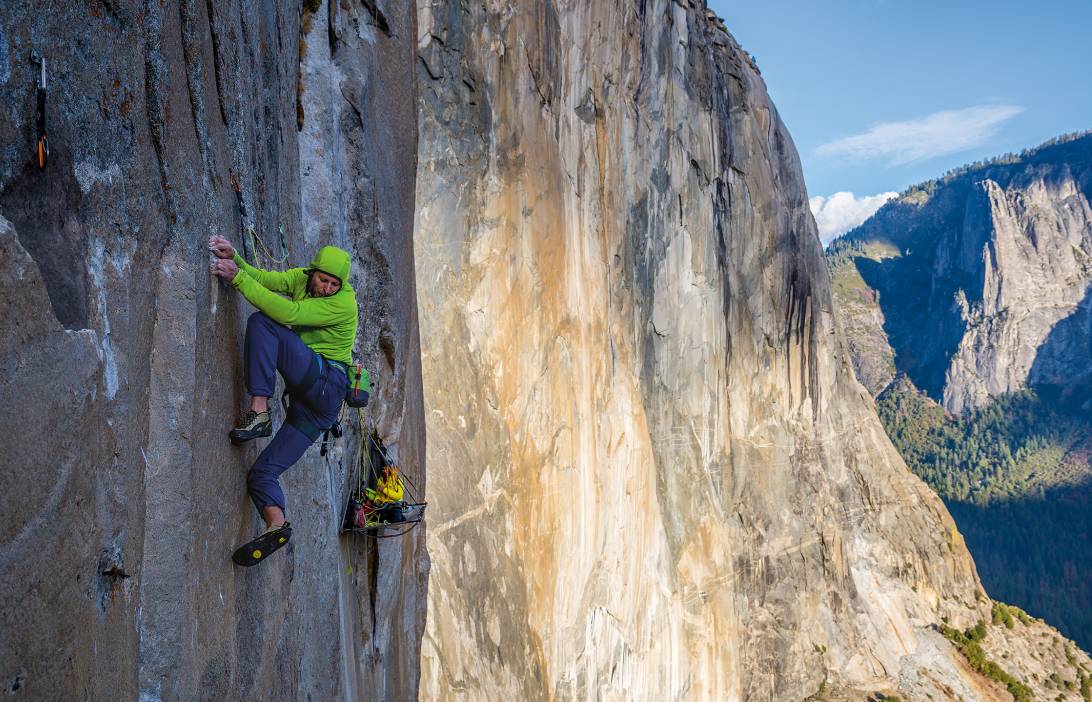
On the Dawn Wall, I convinced myself that fear was the thing holding me back on sections above bad gear. Logically, I knew I wouldn’t hit anything if I fell. So I decided to prove it to myself: I purposefully took a 200-foot fall off the top of El Cap. I expected this to work like it did when I was a teenager. But I must have crossed a line because, for weeks afterward, every time I climbed above my gear, I could feel it again—the drop in my stomach, the wall rushing past, the sound of wind in my ears. Instead of eliminating fear, I’d amplified it.
When I asked Lor about it, they put it this way: “Trauma is just a stress injury. It’s like an injury to our body. In climbing, for example, if we’re afraid of getting tendonitis from training, do we avoid training altogether? Or do we learn how to train properly so we can expose our bodies to enough stress to get stronger, without developing tendonitis?” There’s a threshold where pushing your edge builds capacity, and a point where it overwhelms your system and reinforces fear instead. It’s not just about exposure. It’s about the right amount of exposure, experienced in a way that your brain can actually integrate.
|
When Does “Hard”
Become “Too Hard”?
|
This really made me wonder if, at times, Fitz and Ingrid’s begrudging response to climbing or hiking occurs when we have overwhelmed their systems. Can we find a way to make adventure their “safe place” the way my dad did with me? That’s probably what will ultimately get them hooked on the kind of experiences that build grit and prepare them for the inevitable hardship that will come their way. My conversation with Lor helped me to realize that resilience isn’t just about enduring hard things. It’s about the environment those hard things exist within. It’s built on the sense of safety we feel, the stories we tell, and the people we surround ourselves with.
Climbing is a great place for growth because it provides a container to build resilience. “If we’re held by our belayer, by our community or by ourselves really well in [a small, stressful] situation,” Lor explains, “then we get to have these cute little reparative experiences that over time teach our body, ‘Hey, it’s safe inside of you when scary things happen.’”
With all this in mind, Becca and I are doing our best to create a container of safety when we push Ingrid and Fitz. We hope they understand that we only push them because we believe in them, and they’re safe either way. Maybe that’s all we can do. The rest will be up to the kids themselves.
|
|
|